Properties and Benefits of Lucanian Saffron
Lucanian saffron is rich in beneficial properties and fights stress, depression, and stomach cramps. Lucanian saffron is a spice rich in flavor and beneficial properties for the human body. It's no coincidence that it's widely used in cooking to create tasty and healthy dishes, as well as for treating certain pathologies. It is a small herbaceous plant native to Asia Minor, also cultivated in Basilicata. The plant has characteristic purplish flowers and owes its name to the typical color of the extract obtained from it, which is yellow. The species of saffron found in the Lucanian territory are diverse...
Lucanian saffron is rich in beneficial properties and fights stress, depression, and stomach cramps.
Lucanian saffron is a spice rich in flavor and beneficial properties for the human body. It's no coincidence that it's widely used in cooking to create tasty and healthy dishes, as well as for treating certain pathologies. It is a small herbaceous plant native to Asia Minor, also cultivated in Basilicata. The plant has characteristic purplish flowers and owes its name to the typical color of the extract obtained from it, which is yellow.
There are several species of saffron found in the Lucanian territory, but the most widespread is Crocus Sativus. Let's now discover the nutritional values and beneficial properties of this incredible spice.
Nutritional values and properties of Lucanian saffron
Lucanian saffron has a good protein and fiber content, as shown in the nutritional values table:
| Calories | 310 kcal |
| Proteins | 11.43 g |
| Carbohydrates | 65.37 g |
| Fats | 5.85 g |
| Dietary fiber | 3.9 g |
| Sodium | 148 mg |
| Potassium | 1724 mg |
| Phosphorus | 252 mg |
| Magnesium | 264 mg |
| Vitamin B | 2.83 mg |
| Vitamin C | 80 mg |
| Folates | 93 µg |
nutritional values per 100g of saffron
As the table shows, Lucanian saffron is rich in potassium, phosphorus, and magnesium, with abundant Vitamin C and B vitamins (B1, B2) and folates. However, its therapeutic properties are conferred by safranal, present in the flower's pistils, which gives it its characteristic aroma. Also present are crocin and crocetin, two carotenoids that, in addition to giving saffron its typical yellow color, act as antioxidants.
Health benefits of Lucanian saffron
This incredible spice is especially known for its benefits on the digestive system and for its mood-regulating properties. As previously described, Lucanian saffron contains crocin, crocetin, and safranal, elements that give it very interesting health properties. Let's look in detail at all the benefits of Lucanian saffron:
Antidepressant
Saffron is a valuable ally in the fight against depressive states. This is due to the presence of safranal and crocin, which act on increasing neurotransmitters such as serotonin and dopamine, whose reduced function appears to be the cause of depressive states.
Regulates the digestive system
Thanks to the presence of pigments that increase the secretion of bile and gastric juices, saffron is used as a digestive aid and its use is recommended for those suffering from gastritis. Furthermore, it can prevent gastric ulcers and speed up metabolism due to the presence of B vitamins that promote fat absorption.
Fights free radicals
The presence of antioxidants capable of counteracting the oxidative damage of free radicals allows saffron to prevent cellular aging, also thanks to the presence of Vitamin C.
Benefits for the cardiovascular system
Containing few calories and thinning the blood, saffron lowers blood pressure, thereby reducing hypertension and hypercholesterolemia.
Anti-inflammatory
The presence of curcumin gives saffron anti-inflammatory and detoxifying properties.
Contraindications and negative effects
We have seen the many beneficial properties of saffron. Of course, saffron is not without contraindications and negative health effects. In fact, the use of high quantities of this incredible spice can be harmful to our body. Consuming 5 grams of saffron can lead to bleeding, drowsiness, and dizziness.
The recommended daily dose is below 1.5 grams per day. This dosage is difficult to exceed in daily cooking, as saffron is typically used in quantities between 0.1 and 0.15 grams in recipes.
Powdered saffron or saffron in stigmas?
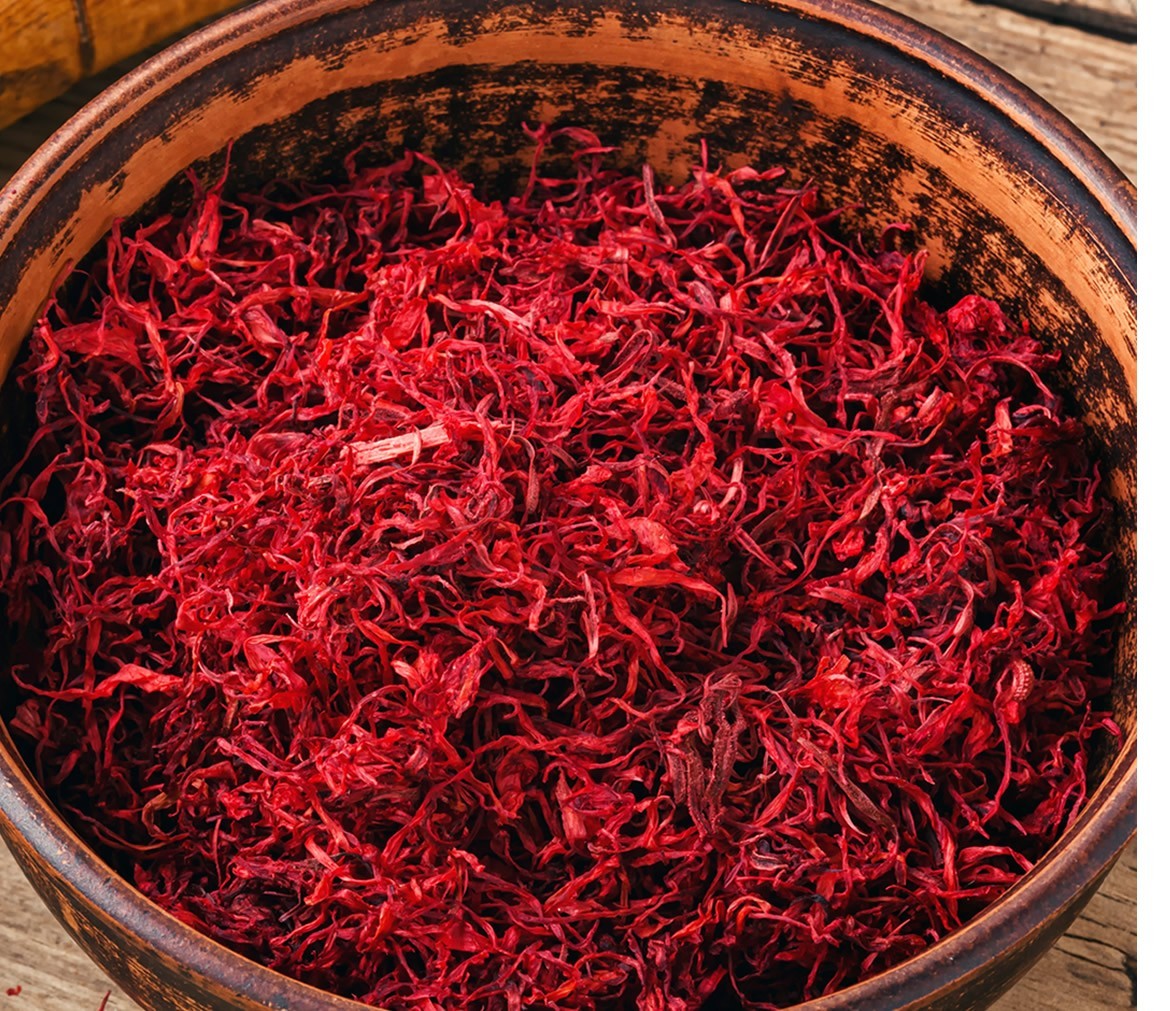
We have no doubt: saffron in stigmas is the best choice. Powdered saffron packets are very common due to their affordability but are qualitatively much inferior to stigmas, as the grinding process can mix saffron of different qualities (typically low quality) and origins. Furthermore, other spices, including turmeric and paprika, may be added to the mixture for their coloring power.
Saffron in stigmas, on the other hand, is pure saffron that not only gives its unique and delicate taste to dishes but also retains all the beneficial properties that make it a healthy spice.
Our saffron in stigmas is therefore pure Lucanian saffron with a high quality profile, and you can find it in our shop in 0.25g and 0.5g jars.